If you’ve been following the world of artificial intelligence lately, you’ve probably heard the name popping up everywhere: Gemini AI. But what exactly is it, and why is everyone talking about it? Whether you’re a tech enthusiast or just someone curious about where AI is headed, this guide breaks it all down in plain language.
If you’re new to this topic, we recommend checking out our earlier blog post, “The Best Generative AI Tools.” It’s a simple and helpful guide to discovering the best Generative AI tools for your needs.
What is Gemini AI?
Gemini AI is Google’s most advanced artificial intelligence model, developed by Google DeepMind. It was officially launched in December 2023 and is designed to be multimodal, meaning it can understand and process text, images, audio, video, and code all at once, not just plain text like older AI systems.
Think of it as a smart assistant that doesn’t just read, but sees, listens, and understands context the way humans naturally do. This makes it one of the most capable AI models available today.
How Does Gemini AI Work?
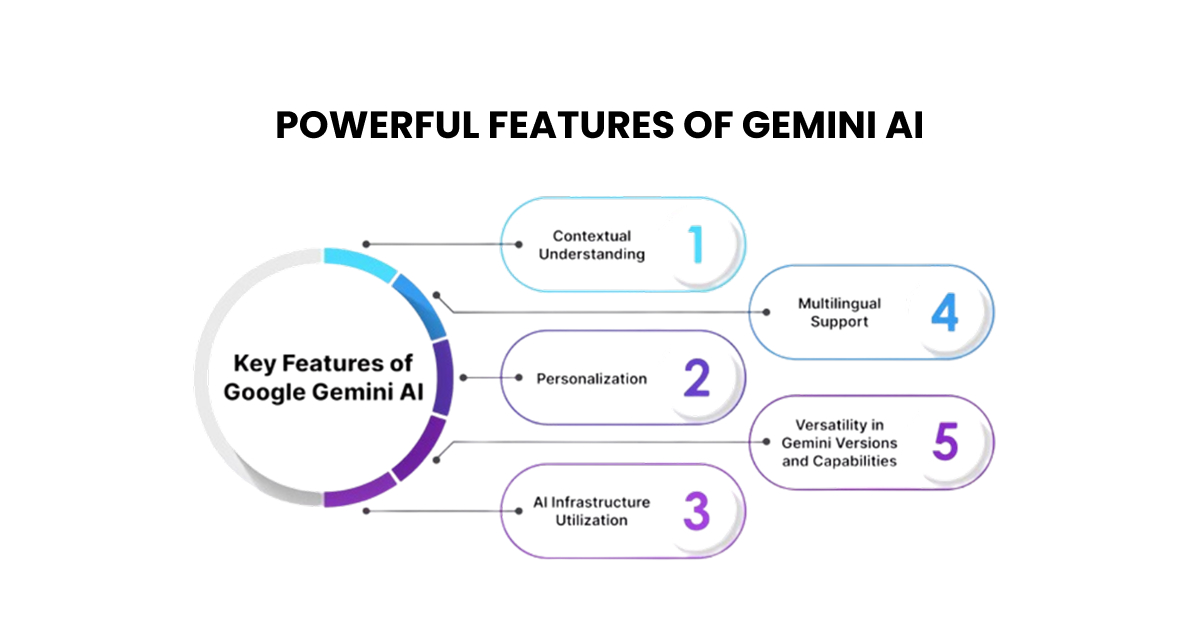
At its core, Gemini AI is built on a large language model (LLM) architecture, but it goes a step further with its multimodal design. Here’s a simple breakdown of how it works:
Multimodal understanding
Unlike earlier AI tools that could handle only one type of input, Gemini processes multiple data types simultaneously. You can share a photo and ask a question about it, or describe a problem in text while uploading a related document; Gemini handles it all together.
Trained on massive, diverse datasets
Gemini was trained on an enormous amount of text, images, audio, and code from across the internet and other sources. This wide-ranging training helps it understand context deeply and give accurate, relevant responses.
Three versions for different needs
Google released Gemini in three sizes: Ultra, Pro, and Nano. Ultra is the most powerful, designed for complex tasks. Pro handles a wide range of everyday tasks, and Nano runs directly on mobile devices for fast, on-device processing.
Real-time reasoning
Gemini is built to reason through problems step by step, not just pull up facts, but actually think through complex questions, which makes it more reliable for tasks like math, coding, and nuanced writing.
Where Can You Use Gemini AI?
Gemini AI is already baked into many Google products. You’ll find it powering Google Bard (now rebranded as Gemini), Google Search, Workspace tools like Docs and Gmail, and Android devices. Developers can also access it through Google’s AI Studio and Vertex AI APIs.
This wide integration is a big deal; it means millions of people are already using Gemini without even realizing it.
Why Does Gemini AI Matter?
The AI space is moving fast, and Gemini represents a serious shift in how we interact with technology. Its ability to handle multiple types of data, reason through problems, and work across Google’s entire ecosystem gives it a real-world edge over many existing models.
For students, professionals, developers, and businesses alike, Gemini AI opens the door to smarter workflows, faster research, better writing, and more personalized digital experiences. It’s not just another chatbot; it’s a foundational technology that’s quietly reshaping how we work and learn every day.
Conclusion
Gemini AI is more than just a tech buzzword; it’s a genuine leap forward in how artificial intelligence understands and interacts with the world. From processing text and images together to reasoning through complex problems in real time, it’s changing what we expect from AI tools.
Whether you’re a student, a professional, or just someone exploring what’s possible, Gemini is worth paying attention to. As Google continues to develop and expand its capabilities, one thing is clear: AI is no longer the future. It’s already here, and Gemini is right at the center of it. Explore more AI tips, tech breakdowns, and beginner-friendly tutorials at BlogAcademy.tech.