In today’s digital age, you’ve probably heard the term “Machine Learning AI” thrown around in tech conversations, news articles, and business meetings. But what exactly is it, and why should you care? Let me break it down for you in simple terms.
Before reading this blog post, see our article about What Is The Impact Of Artificial Intelligence (AI) On Society?. Understanding the impact of Artificial Intelligence is crucial as we navigate this technological revolution.
Understanding Machine Learning: The Basics
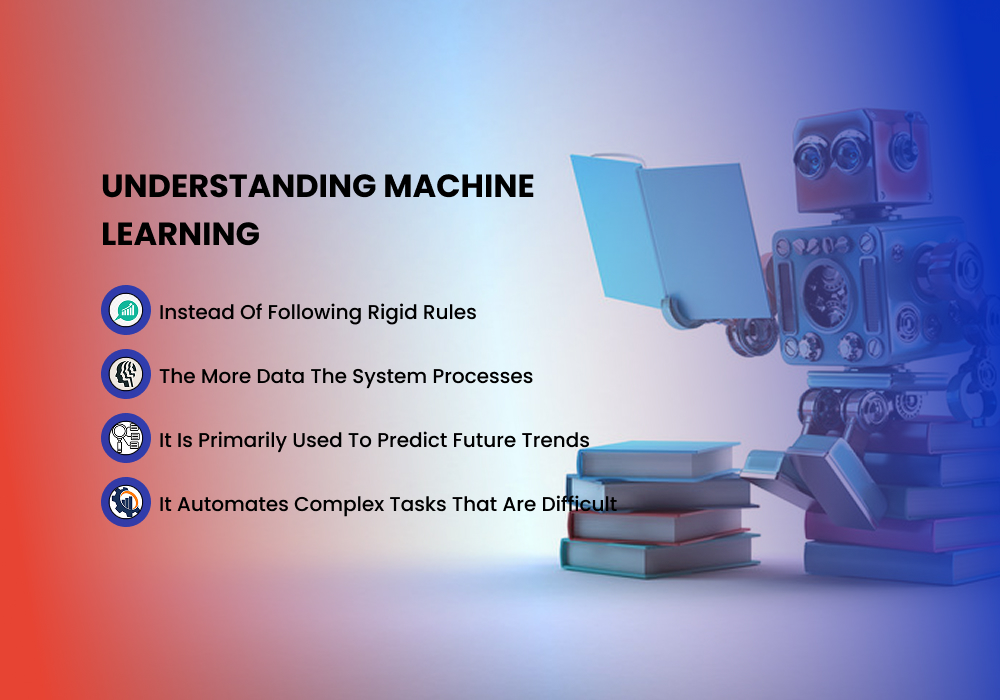
Machine Learning is essentially teaching computers to learn from experience, just like humans do. Instead of programming every single instruction, we give computers the ability to learn patterns from data and make decisions independently.
Think of it as training a digital brain to recognize patterns and solve problems without being explicitly told how to do it every single time.
For example, when Netflix recommends shows you might enjoy, or when your email filters out spam automatically, that’s Machine Learning AI in action. These systems have learned from millions of examples to understand what you like or what constitutes unwanted emails.
How Does Machine Learning Work?
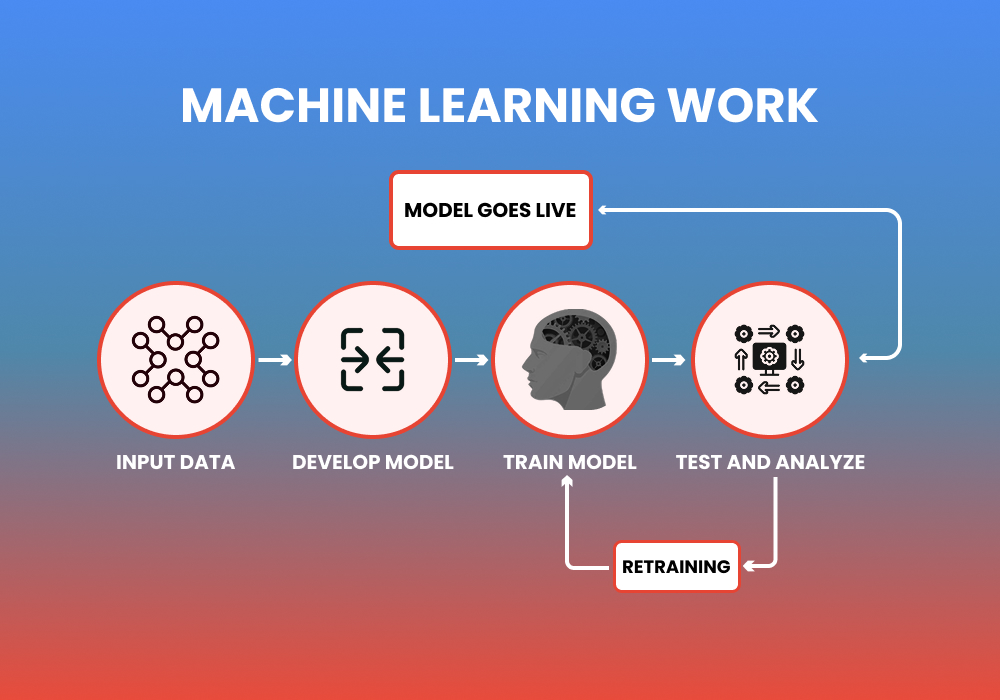
The process is surprisingly straightforward in concept. Here’s how Machine Learning algorithms operate:
- Data Collection: The system gathers large amounts of relevant information from various sources
- Pattern Recognition: Algorithms analyze this data to identify trends, relationships, and recurring patterns
- Learning Process: The system builds a model based on the patterns it discovers in the training data
- Prediction & Decision Making: Using what it learned, the algorithm makes predictions or decisions on new, unseen data
- Continuous Improvement: The system refines its accuracy through feedback and additional data exposure
It’s like teaching a child to recognize animals, you show them many pictures of dogs and cats until they can tell the difference on their own.
The Three Main Types of Machine Learning
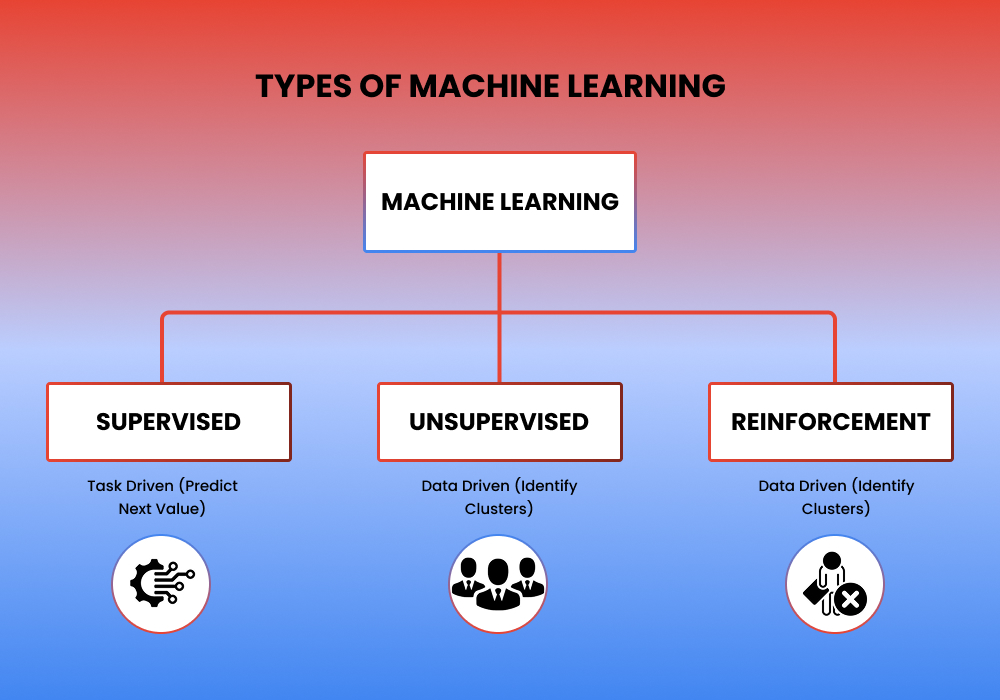
- Supervised Learning is when we provide the algorithm with labeled examples. It’s like studying with an answer key; the system learns by seeing both questions and correct answers.
- Unsupervised Learning works differently. Here, the algorithm explores data without guidance, discovering hidden patterns on its own. Imagine sorting a mixed box of toys without instructions, you’d naturally group similar items together.
- Reinforcement Learning is all about learning through trial and error. The system receives rewards for correct actions and learns to maximize these rewards over time, similar to training a pet with treats.
Real-World Applications of Machine Learning AI
Machine Learning AI has revolutionized numerous industries. In healthcare, it helps doctors diagnose diseases more accurately by analyzing medical images. Financial institutions use it to detect fraudulent transactions in real-time.
Self-driving cars rely on artificial intelligence systems to navigate roads safely. Even yoursmartphone’s voice assistant uses these intelligent algorithms to understand and respond to your commands.
The technology is also transforming e-commerce through personalized shopping experiences, improving customer service with chatbots, and optimizing supply chain management for businesses worldwide.
Why Machine Learning Matters for the Future?
As we generate more data every day, the importance of Machine Learning continues to grow. This technology doesn’t just automate tasks; it discovers insights that humans might miss and solves complex problems at incredible speeds.
Companies that embrace these intelligent systems gain competitive advantages through better decision-making and improved efficiency.
The beauty of Machine Learning AI is that it continuously improves. The more data these systems process, the smarter they become, creating a positive cycle of learning and enhancement.
Frequently Asked Questions
Q: Is Machine Learning the same as Artificial Intelligence?
Machine Learning is actually a subset of AI. While AI is the broader concept of machines performing intelligent tasks, Machine Learning specifically refers to systems that learn from data.
Q: Do I need programming skills to understand Machine Learning?
Not necessarily! While building these systems requires technical knowledge, understanding the basic concepts is accessible to everyone.
Q: Can small businesses benefit from Machine Learning?
Absolutely! Many affordable tools and platforms now make this technology accessible to businesses of all sizes.
Q: Is Machine Learning safe and ethical?
When developed responsibly with proper oversight, these systems can be both safe and beneficial. However, ethical considerations remain important in their development and deployment.
Q: How long does it take to learn Machine Learning?
Basic understanding can be achieved in a few months, but mastery typically requires consistent practice and study over 1-2 years.
Q: What industries use Machine Learning the most?
Technology, healthcare, finance, retail, and manufacturing are among the leading adopters of these intelligent systems.
Ready to Dive Deeper into AI Technology?
Understanding Machine Learning AI is just the beginning of your journey into the fascinating world of artificial intelligence.
Whether you’re a curious learner, aspiring developer, or business professional, there’s never been a better time to expand your knowledge.
Visit BlogAcademy.tech for more in-depth tutorials, practical guides, and expert insights that will help you master the technologies shaping our future.