Blockchain has transformed how we think about data security, transparency, and digital transactions. But did you know that not all blockchains work the same way?
Understanding the types of blockchain technology is essential for anyone looking to leverage this innovative system for their business or personal projects.
Whether you’re a curious beginner or someone exploring blockchain solutions, this guide will walk you through the different blockchain categories and help you understand which one fits your needs.
Before reading this blog post, see our previous blog post about The Most Popular Blockchain Networks, which helps you find out the Popular Blockchain Networks.
Understanding Blockchain Varieties
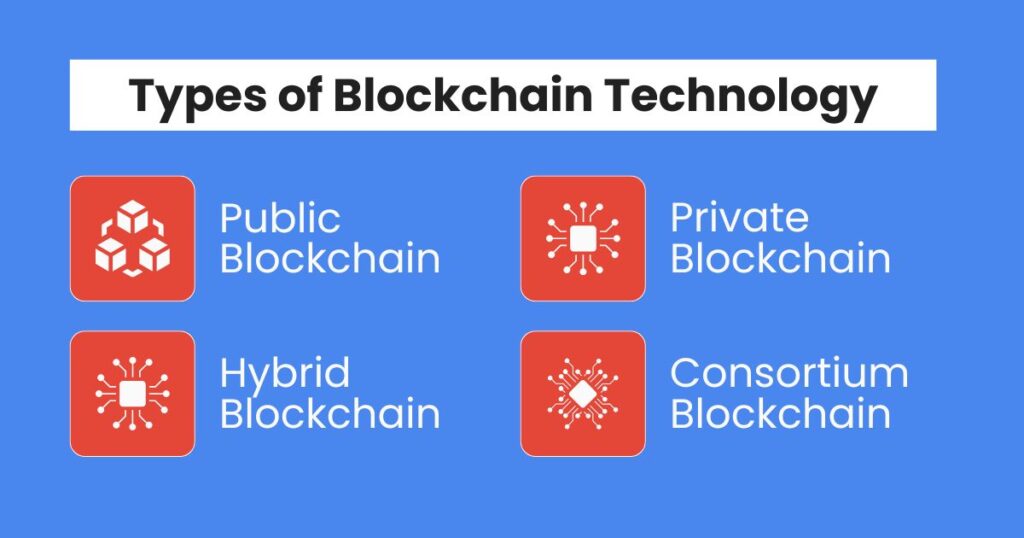
At its core, blockchain is a distributed ledger technology that records transactions across multiple computers. However, the types of blockchain technology vary based on who can access them and how they operate. Let’s break down the main categories.
1. Public Blockchain
Public blockchains are completely open to everyone. Anyone can join the network, participate in transactions, and validate blocks. Bitcoin and Ethereum are perfect examples of this blockchain variant.
Key Features:
- Fully decentralized with no single authority
- Transparent transactions are visible to all participants
- High security through cryptographic techniques
- Slower transaction speeds due to consensus mechanisms
Public blockchains are ideal for cryptocurrency applications and situations where maximum transparency is needed. They give users complete control over their data without relying on third parties.
2. Private Blockchain
Private blockchains operate within a closed network with restricted access. Organizations use these blockchain systems to maintain control over who participates and views transactions.
Key Features:
- Controlled by a single organization or consortium
- Faster transaction processing
- Enhanced privacy for sensitive business data
- Lower operational costs compared to public chains
Businesses often choose private blockchains for supply chain management, internal record-keeping, and confidential data sharing.They offer the benefits of blockchain technology while maintaining organizational control.
3. Hybrid Blockchain
Hybrid blockchains combine the best of both worlds. They allow organizations to set up a private, permission-based system alongside a public permissionless system. This flexibility makes hybrid solutions increasingly popular.
Key Features:
- Controlled access with selective transparency
- Customizable privacy settings
- Flexible architecture for various use cases
- Balance between security and openness
Companies use hybrid blockchains when they need to keep certain information private while making other data publicly verifiable. Real estate transactions and healthcare records are common applications.
4. Consortium Blockchain
Consortium blockchains, also called federated blockchains, are controlled by a group of organizations rather than a single entity. This collaborative approach is perfect for industries where multiple parties need to work together.
Key Features:
- Shared control among pre-selected organizations
- Faster and more scalable than public blockchains
- Reduced centralization risks
- Cost-effective for collaborative projects
Banks, research institutions, and industry groups often implement consortium blockchains for cross-organizational workflows and data sharing.
Choosing the Right Blockchain Type
Selecting among the types of blockchain technology depends on your specific requirements. Consider factors like privacy needs, transaction speed, scalability, and regulatory compliance.
Public blockchains suit projects prioritizing transparency and decentralization. Private and consortium options are better suited to businesses that need controlled access and faster performance.
The Future of Blockchain Categories
As technology evolves, we’re seeing innovations that blur the lines between these blockchain classifications. New hybrid models and specialized solutions continue to emerge, offering even more options for different industries and applications.
Understanding these fundamental types of blockchain technology empowers you to make informed decisions about implementing blockchain solutions.
Whether you’re launching a cryptocurrency project, streamlining business operations, or exploring new technological frontiers, there’s a blockchain type that fits your vision.
Frequently Asked Questions
Q1: What’s the main difference between public and private blockchains?
Public blockchains are open to everyone and fully decentralized, while private blockchains have restricted access and are controlled by specific organizations. Public chains prioritize transparency; private chains focus on privacy and speed.
Q2: Which blockchain type is most secure?
Public blockchains are generally considered most secure due to their decentralized nature and large number of validators. However, private blockchains can be secure within their controlled environment through proper implementation and access controls.
Q3: Can I switch between blockchain types later?
Switching blockchain types after implementation is technically challenging and often requires rebuilding your system. It’s crucial to choose the right blockchain category from the start based on your long-term goals and requirements.
Q4: Are hybrid blockchains expensive to maintain?
Hybrid blockchains can be cost-effective as they allow you to balance between public and private features. Costs depend on your specific implementation, transaction volume, and infrastructure requirements.
Q5: Which industries benefit most from consortium blockchains?
Banking, healthcare, supply chain, and insurance industries benefit significantly from consortium blockchains. These sectors often require collaboration between multiple trusted parties while maintaining data security and efficiency.
Ready to Explore Blockchain Technology?
Now that you understand the different blockchain categories, it’s time to dive deeper into this revolutionary technology. Visit BlogAcademy.tech for comprehensive guides, tutorials, and insights to help you master blockchain and stay ahead in the digital world.
Don’t let this opportunity pass you by. Start your blockchain journey today and unlock the potential of decentralized technology for your projects.