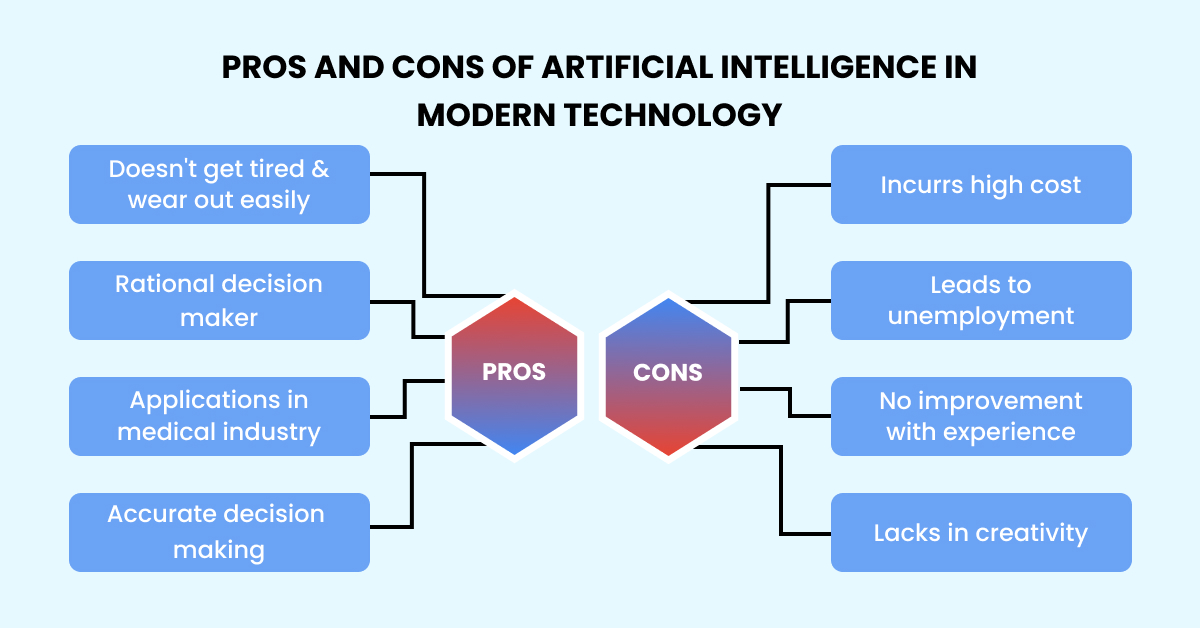
Artificial Intelligence has transformed from a futuristic concept into an integral part of our daily lives. From the smartphones in our pockets to the recommendation systems we use for streaming entertainment, AI is reshaping how we interact with technology.
However, like any powerful tool, understanding the pros and cons of artificial intelligence is essential for navigating our increasingly automated world.
Before reading this blog post, check out our previous article on Best Free Artificial Intelligence Tools for Students, where you’ll discover the top free AI tools that help students learn smarter and work more efficiently.
What is Artificial Intelligence?
Before diving into the advantages and disadvantages, it’s important to understand what AI actually means. Artificial Intelligence refers to computer systems designed to perform tasks that typically require human intelligence, such as learning, problem-solving, pattern recognition, and decision-making. These systems use algorithms and vast amounts of data to improve their performance over time.
Pros and Cons of Artificial Intelligence
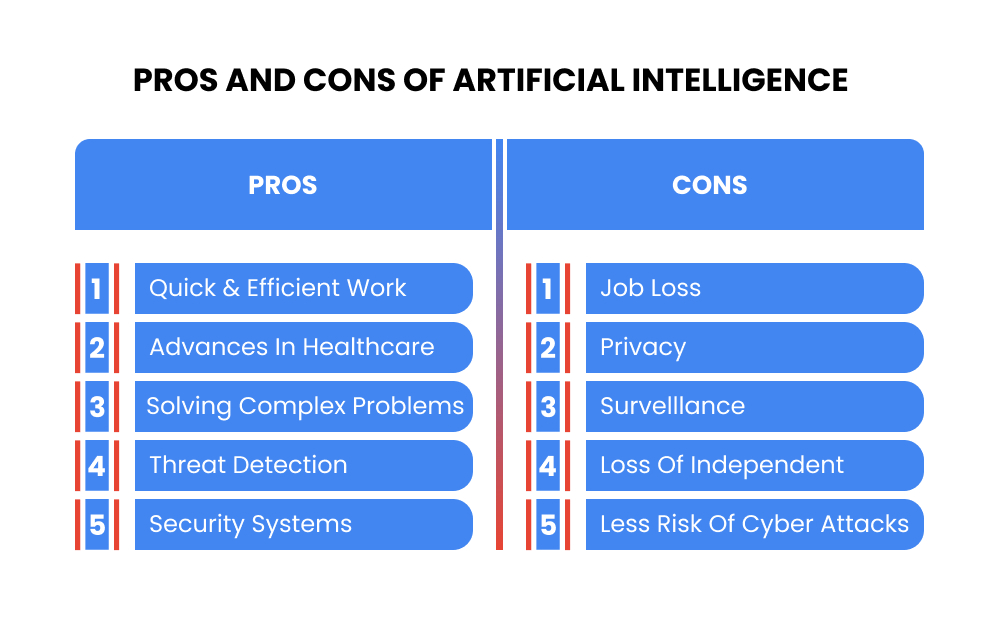
Explore the pros and cons of artificial intelligence in modern technology. Learn how AI impacts efficiency, jobs, privacy, and decision-making in our digital world.
The Pros of Artificial Intelligence in Modern Technology
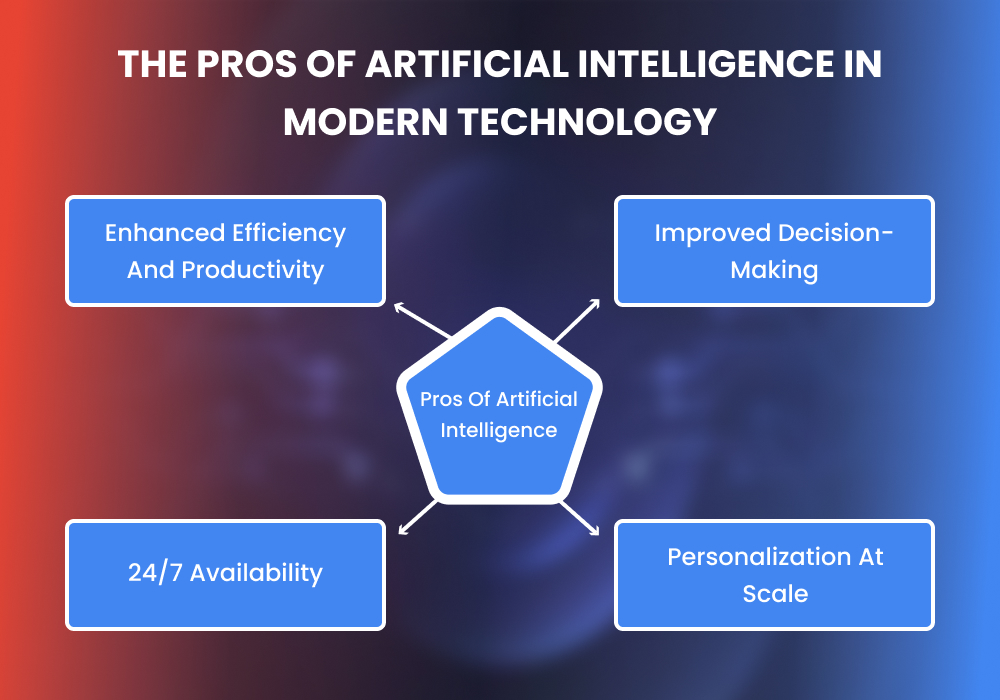
Enhanced Efficiency and Productivity
One of the most significant benefits of AI is its ability to process information and complete tasks much faster than humans. Businesses across industries use AI-powered automation to streamline operations, reduce errors, and increase output. Manufacturing plants employ robots for precision assembly, while customer service departments use chatbots to handle thousands of inquiries simultaneously.
Improved Decision-Making
AI systems excel at analyzing massive datasets to identify patterns and trends that humans might miss. In healthcare, AI algorithms can detect diseases with remarkable accuracy from medical images. Financial institutions use AI to assess credit risks and detect fraudulent transactions in real-time, protecting both businesses and consumers.
24/7 Availability
Unlike human workers who need rest, AI systems can operate continuously without fatigue. This constant availability is particularly valuable in customer support, security monitoring, and critical infrastructure management. Your favorite streaming service recommends content at any hour because AI never sleeps.
Personalization at Scale
Modern AI creates customized experiences for millions of users simultaneously. From personalized learning platforms that adapt to individual student needs to targeted healthcare treatments based on genetic profiles, AI makes personalization accessible to everyone, not just a privileged few.
Cons of Artificial Intelligence in Modern Technology
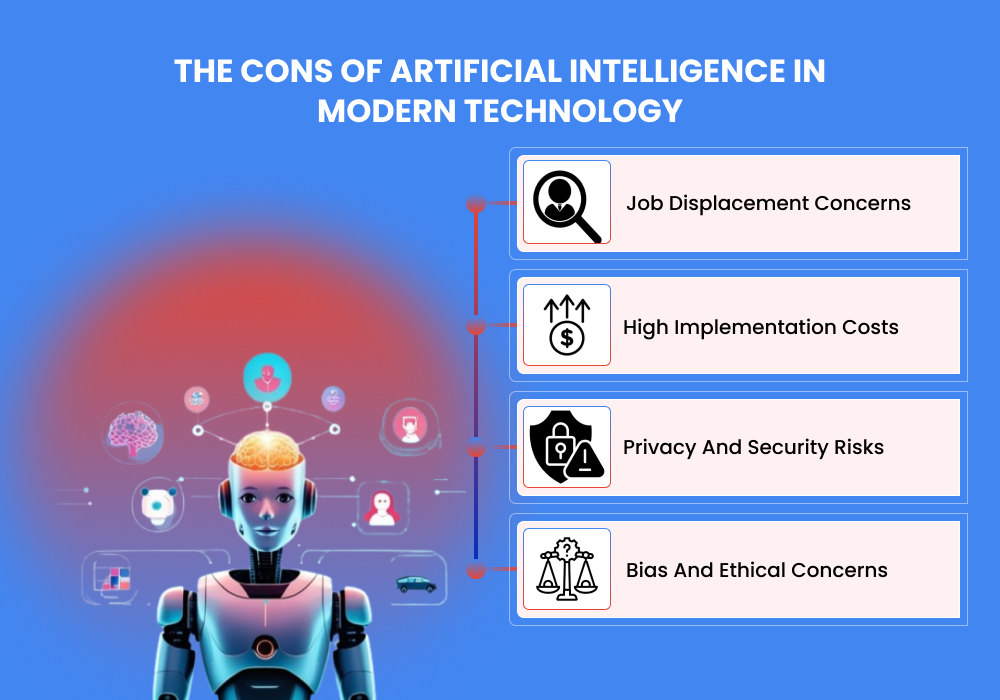
Job Displacement Concerns
When examining the pros and cons of artificial intelligence, employment impacts cannot be ignored. As AI automation becomes more sophisticated, many traditional jobs are at risk of obsolescence.
Manufacturing, data entry, and even some professional roles are being replaced by intelligent systems, creating economic challenges for displaced workers who must retrain for new careers.
High Implementation Costs
Developing and deploying AI systems requires substantial financial investment. Small businesses often struggle to afford the infrastructure, specialized talent, and ongoing maintenance needed for AI solutions. This creates a competitive disadvantage and widens the gap between large corporations and smaller enterprises.
Privacy and Security Risks
AI systems require vast amounts of data to function effectively, raising serious privacy concerns. Every interaction with AI-powered services generates data that could be misused, hacked, or sold.
Facial recognition technology, while useful for security, also enables unprecedented surveillance capabilities that threaten personal freedoms.
Lack of Human Touch
Despite sophisticated algorithms, AI cannot replicate human empathy, creativity, and emotional intelligence. In fields like counseling, teaching, and healthcare, the human connection remains irreplaceable. Over-reliance on AI risks creating cold, impersonal experiences that diminish our quality of life.
Bias and Ethical Concerns
AI systems learn from historical data, which often contains human biases. This can perpetuate discrimination in hiring, lending, law enforcement, and other critical areas. Without careful oversight, AI might amplify existing inequalities rather than reduce them.
Finding the Balance
Understanding the pros and cons of artificial intelligence helps us make informed decisions about its role in society. The key lies not in rejecting AI entirely or embracing it uncritically, but in thoughtful implementation that maximizes benefits while minimizing harm.
Policymakers, technologists, and citizens must work together to establish ethical guidelines, ensure transparency in AI systems, and create safety nets for those affected by technological displacement.
Education systems should prepare people for an AI-augmented future by emphasizing uniquely human skills like critical thinking, creativity, and emotional intelligence.
As we continue integrating AI into modern technology, maintaining human oversight and accountability remains paramount. The pros and cons of artificial intelligence will continue evolving as the technology advances, making ongoing dialogue and adaptation essential.
Frequently Asked Questions
What are the main benefits of artificial intelligence?
The primary benefits include increased efficiency, improved decision-making through data analysis, 24/7 availability, cost reduction in the long term, and personalized experiences for users across various applications.
Can AI completely replace human workers?
While AI can automate many tasks, it cannot fully replace human creativity, emotional intelligence, and complex problem-solving. Most experts believe AI will augment human work rather than completely replace it, though some job categories will significantly change.
Is artificial intelligence dangerous?
AI itself is a tool without intent. The dangers come from misuse, lack of oversight, or poorly designed systems. Concerns include privacy violations, algorithmic bias, autonomous weapons, and economic disruption. Responsible development and regulation can mitigate these risks.
How expensive is it to implement AI technology?
Costs vary widely depending on the application. Basic AI tools and cloud-based services can be affordable for small businesses, while custom AI solutions requiring specialized hardware and talent can cost millions. Prices are generally decreasing as the technology matures.
What industries benefit most from artificial intelligence?
Healthcare, finance, manufacturing, retail, transportation, and entertainment see significant AI benefits. However, virtually every industry now uses some form of AI, from agriculture using predictive analytics to legal firms employing document analysis tools