Artificial Intelligence (AI) is transforming how modern businesses operate, but successful AI projects don’t start with technology alone. They begin with a clear understanding of what problem AI is meant to solve. This is where the Seven Patterns of Artificial Intelligence (AI) framework becomes essential.
The patterns of Artificial Intelligence provide a practical way to categorize how AI is applied to recurring business and technical challenges. Widely used in AI project management frameworks such as CPMAI, these patterns help organizations define the purpose, scope, and implementation strategy for AI solutions.
Let’s explore the seven patterns and how they are used in real-world applications.
What Are AI Patterns?
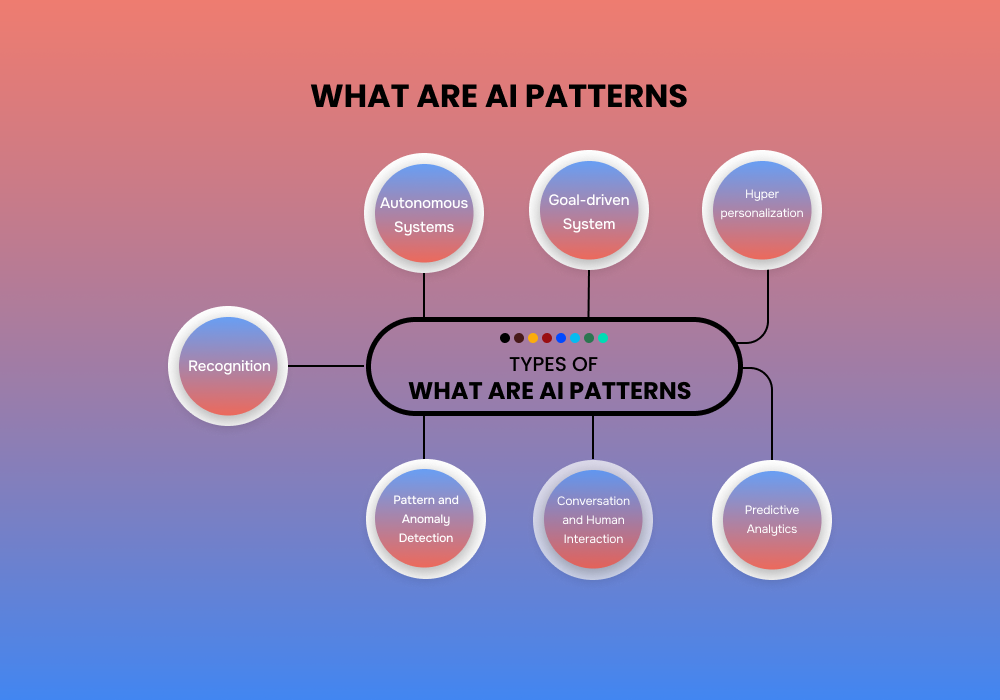
AI patterns are reusable solution models that describe how artificial intelligence delivers value. Instead of focusing on algorithms, they focus on outcomes, such as personalization, prediction, automation, or optimization.
Understanding the patterns of Artificial Intelligence helps businesses choose the right AI approach, reduce project risk, and improve return on investment.
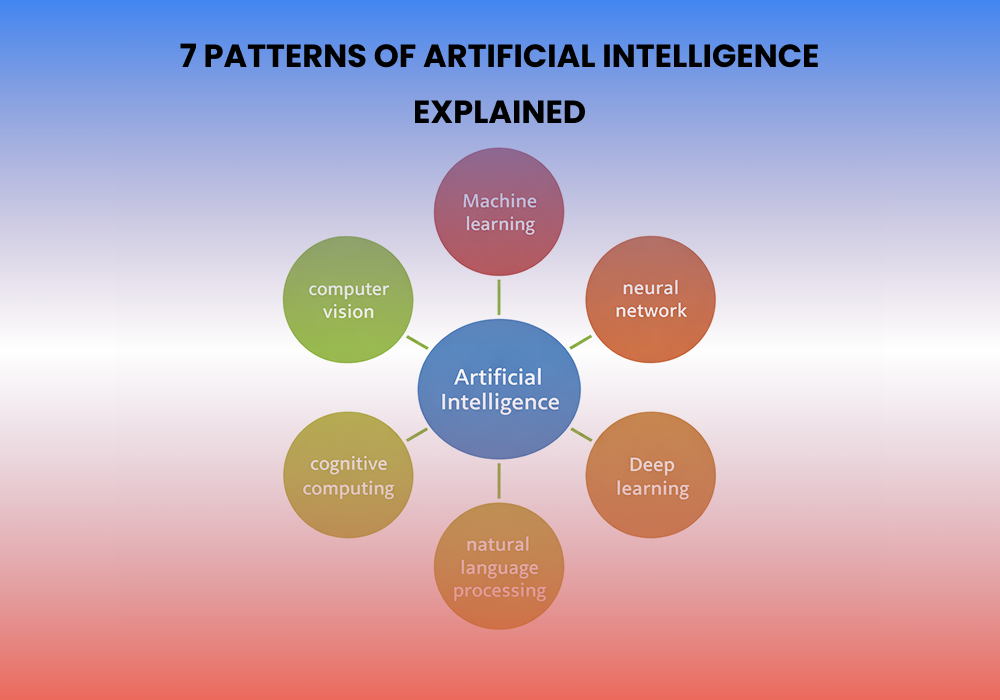
The 7 Patterns of Artificial Intelligence Explained
1. Hyperpersonalization
Hyperpersonalization uses machine learning to build detailed individual profiles, going far beyond basic demographic segmentation. AI continuously learns from user behavior to deliver highly tailored experiences.
Examples:
- Personalized product recommendations (Netflix, Spotify)
- Individualized healthcare treatment plans
- Targeted digital marketing campaigns
2. Autonomous Systems
Autonomous systems are AI-driven agents, physical or digital, that operate independently with minimal human input. They are designed to automate complex, multi-step processes.
Examples:
- Self-driving vehicles
- Warehouse and delivery robots
- Autonomous software bots for operations
3. Predictive Analytics & Decision Support

This pattern analyzes historical and real-time data to forecast future outcomes. The goal is to support humans in making data-driven decisions rather than replacing them.
Examples:
- Sales and demand forecasting
- Credit risk assessment
- Predictive maintenance in manufacturing
4. Conversational and Human Interaction
This pattern enables natural communication between humans and machines through text or voice. Generative AI, it also includes content creation.
Examples:
- Chatbots and customer support assistants
- Voice assistants like Siri and Alexa
- AI tools for writing, images, and video content
5. Pattern and Anomaly Detection
AI systems learn what “normal” data looks like and identify unusual behavior or deviations. This pattern is critical for risk prevention and quality control.
Examples:
- Fraud detection in banking
- Cybersecurity threat monitoring
- Manufacturing defect detection
6. Recognition
Recognition systems identify objects, people, sounds, or text within unstructured data such as images, video, and audio.
Examples:
- Facial recognition systems
- Medical image diagnostics
- Speech-to-text transcription
7. Goal-Driven Systems
Goal-driven AI learns through feedback, testing actions to maximize rewards and achieve long-term objectives. This pattern often uses reinforcement learning.
Examples:
- AI systems like AlphaGo
- Route and logistics optimization
- Supply chain planning
Why the Seven AI Patterns Matter?
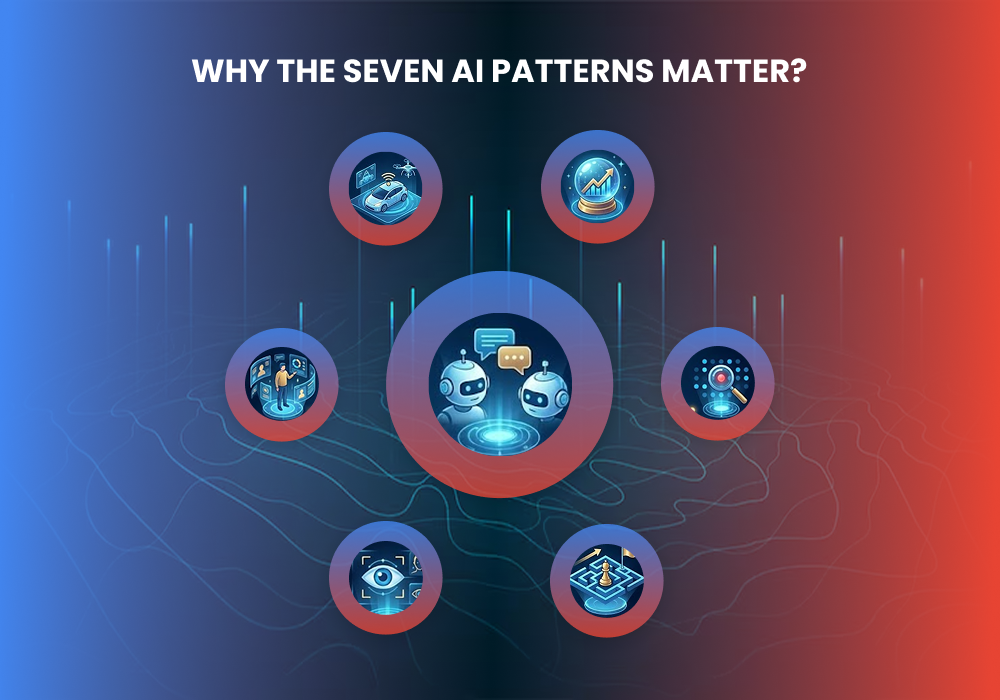
Using the patterns of the Artificial Intelligence framework allows organizations to align AI initiatives with real business needs. Instead of experimenting blindly, teams can select the right pattern based on the problem they want to solve, making AI projects more efficient, ethical, and scalable.
This approach is especially valuable for AI strategy, product design, and digital transformation planning.
Frequently Asked Questions (FAQs)
What are the seven patterns of AI?
They are reusable models that describe how AI solves common business and technical problems.
Which AI pattern is most common in businesses today?
Hyperpersonalization and predictive analytics are widely used.
Are AI patterns part of CPMAI?
Yes, they are commonly used in CPMAI-based AI project management.
Do AI patterns focus on technology or outcomes?
They focus on outcomes and problem-solving approaches.
Can one AI system use multiple patterns?
Yes, many advanced AI solutions combine multiple patterns.
Final Thoughts
Artificial Intelligence is not one-size-fits-all. The Seven Patterns of Artificial Intelligence (AI) offer a clear, practical structure for understanding how AI delivers value across industries.
From hyperpersonalization to goal-driven optimization, these patterns guide smarter AI adoption today and in the future. For more expert insights and easy-to-understand tech guides, visit BlogAcademy.tech.