If you’ve been hearing the term machine learning everywhere lately, you’re not alone. From Netflix recommendations to fraud detection, machine learning is quietly powering the technology we use every day. But where do you begin if you want to learn it yourself? A machine learning crash course is the fastest, most structured way to go from curious beginner to confident learner, without spending years in a classroom.
What Is Machine Learning and Why Should You Learn It?
Machine learning (ML) is a branch of artificial intelligence where computers learn from data and improve their performance over time without being explicitly programmed for every task.
Instead of writing thousands of rules, you feed the system examples, and it figures out the patterns on its own. Learning machine learning opens doors to some of the fastest-growing careers in tech, including data science, AI engineering, and business analytics.
Whether you’re a student, a developer, or a professional looking to upskill, starting with a focused crash course is the smartest move you can make in 2026.
What Does a Machine Learning Crash Course Cover?
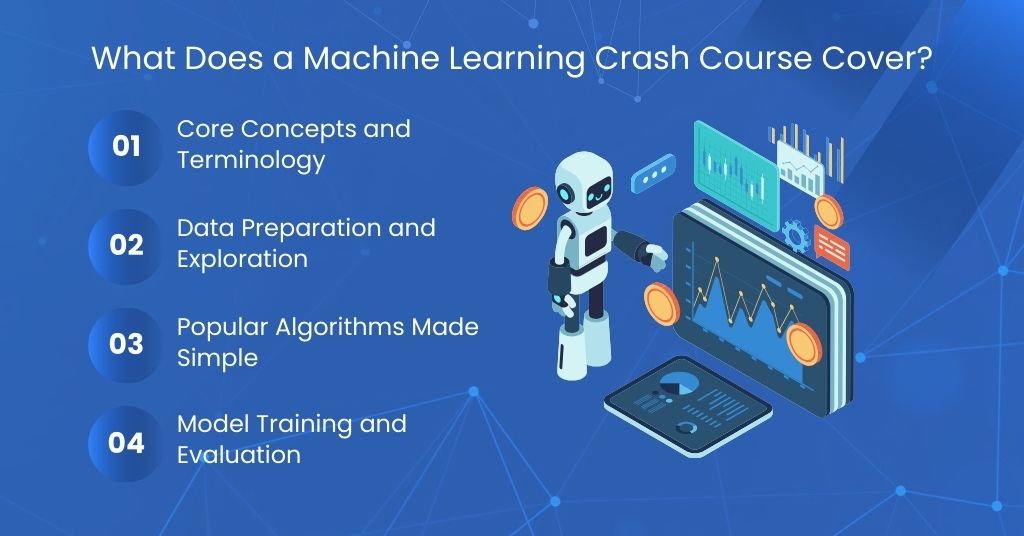
A well-structured machine learning crash course typically walks you through the core ideas without overwhelming you with heavy math right away. Here’s what most beginner-friendly courses include:
- Core Concepts and Terminology: You’ll start by learning the difference between supervised learning, unsupervised learning, and reinforcement learning. These are the three main approaches that power most ML systems in the real world.
- Data Preparation and Exploration: Machine learning runs on data. You’ll learn how to clean messy datasets, handle missing values, and explore patterns using tools like Python and Pandas.
- Popular Algorithms Made Simple: From linear regression to decision trees and neural networks, a crash course breaks down these algorithms into plain English, so you actually understand why they work, not just how to run the code.
- Model Training and Evaluation: You’ll learn how to train a model, test it on new data, and measure how well it performs using metrics like accuracy, precision, and recall.
- Hands-On Projects: The best courses don’t just teach theory; they give you real projects to build, like predicting house prices or classifying images. These projects also strengthen your portfolio.
Who Should Take a Machine Learning Crash Course?
The honest answer? Almost anyone with a basic curiosity about technology. You don’t need a PhD in mathematics or years of programming experience. Most beginner crash courses only require:
- Basic Python knowledge (or the willingness to learn it quickly)
- Comfort with simple math concepts like averages and percentages
- A laptop and a free Google Colab or Jupyter Notebook account
Students, working professionals, freelancers, and entrepreneurs are all jumping into machine learning because the demand for these skills isn’t slowing down anytime soon.
Best Free Resources to Start Your Machine Learning Journey
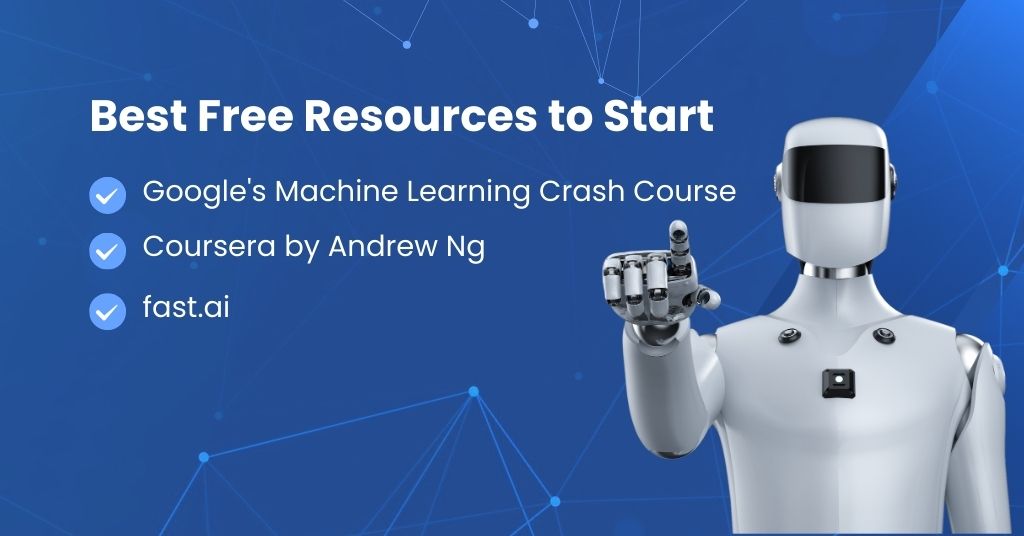
You don’t have to spend a fortune to get started. Here are some top picks:
- Google’s Machine Learning Crash Course: Google offers a completely free machine learning crash course on its developer platform. It’s beginner-friendly, interactive, and uses real TensorFlow examples.
- Coursera by Andrew Ng: Andrew Ng’s Machine Learning Specialization is one of the most respected programs in the world. The audit option makes it accessible for free.
- fast.ai: A hands-on, practical course that teaches you to build real models before diving deep into theory, perfect for visual and project-based learners.
Tips to Get the Most Out of Your Machine Learning Crash Course
Learning ML efficiently comes down to consistency and practice. Code along with every lesson instead of just watching. Join online communities like Reddit’s r/MachineLearning or Discord groups where you can ask questions. Most importantly, finish at least one real project before moving on. It cements your understanding better than any lecture.
Frequently Asked Questions (FAQs)
Q1. How long does a machine learning crash course take?
Most crash courses take anywhere from 2 to 8 weeks, depending on the pace and depth of the content.
Q2. Do I need to know Python before starting?
Basic Python knowledge helps, but many beginner courses teach Python alongside ML concepts simultaneously.
Q3. Is machine learning hard to learn from scratch?
It can feel overwhelming at first, but starting with a structured crash course makes the learning curve much more manageable.
Q4. Can I get a job after completing a machine learning crash course?
A crash course alone may not be enough, but it’s a strong starting point. Combining it with projects and certifications significantly boosts your job prospects.
Q5. Are there free machine learning crash courses available online?
Yes! Google, Coursera (audit mode), fast.ai, and Kaggle all offer high-quality free resources to get you started.
Ready to start your journey? Visit blogacademy. tech for more beginner-friendly guides on tech, AI, and digital learning.