The marketing landscape is experiencing a seismic shift, and artificial intelligence is at the center of this transformation.
Businesses worldwide are discovering how generative AI tools are reshaping the way they connect with audiences, create content, and drive results.
If you’re wondering whether this technology is worth your attention, the answer is a resounding yes.
Before reading this blog post, see our previous blog about The Rise of Generative AI: What You Need to Know. It helps you know about Generative AI clearly.
How AI is Changing the Marketing Game?

The impact of generative AI on marketing isn’t just about automation; it’s about amplification. Marketing teams that once spent days crafting campaigns can now generate initial concepts in minutes.
From writing compelling ad copy to designing eye-catching visuals, AI-powered tools are becoming indispensable partners in the creative process.
What makes this particularly exciting is accessibility. Small businesses with limited budgets can now compete with larger corporations by leveraging AI to produce professional-grade content.
A solo entrepreneur can create social media posts, email campaigns, and blog articles without hiring an entire marketing department.
Impact of Generative AI
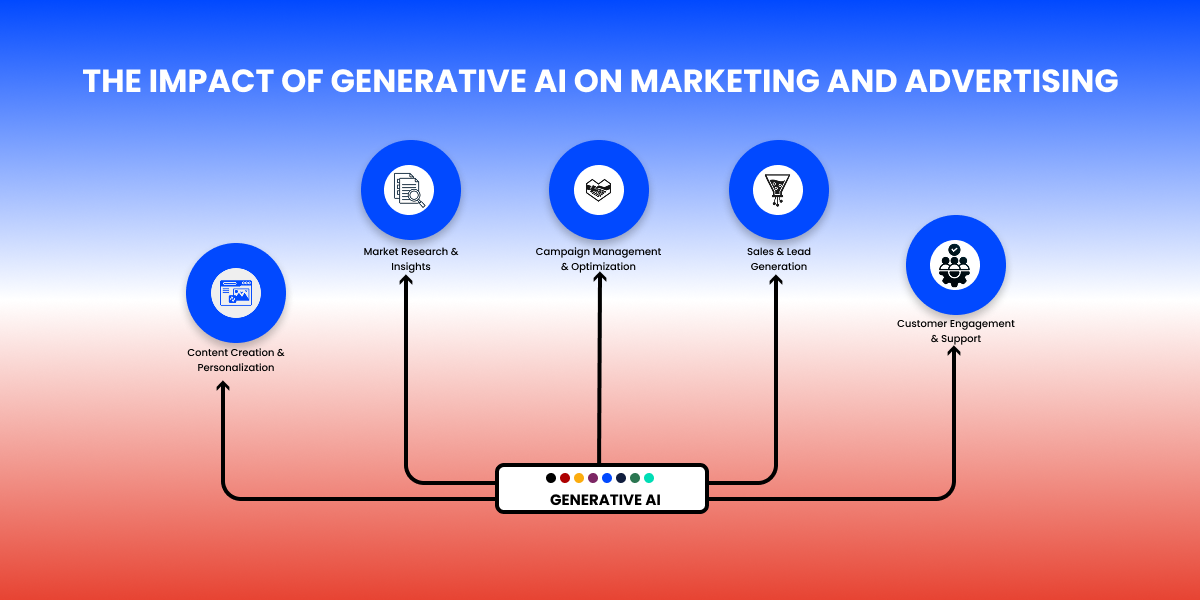
The impact of generative AI on marketing is transforming how businesses create content, personalize customer experiences, and drive engagement at unprecedented speed and scale.
Content Creation at Lightning Speed
Content is still king, but the influence of generative AI has made it easier to wear that crown. Writers and marketers are using AI to overcome creative blocks, generate headline variations, and even draft entire articles.
However, the human touch remains crucial; AI provides the foundation, while human creativity adds the soul. Consider email marketing campaigns.
Instead of manually writing dozens of subject line variations, marketers can generate multiple options instantly, test them, and identify what resonates with their audience.
This data-driven approach, powered by AI, leads to higher open rates and better engagement.
Personalization That Actually Works
Today’s consumers expect personalized experiences, and AI delivers precisely that. The impact of generative AI extends to creating individualized content for different audience segments.
Imagine sending emails where every recipient feels like you’re speaking directly to them. AI makes this scalable.
From product recommendations to dynamic website content, AI analyzes user behavior and preferences to deliver relevant messages.
This level of personalization was once reserved for companies with massive budgets and technical teams. Now, it’s available to businesses of all sizes.
Visual Content and Design Revolution
Marketing isn’t just about words. The effect of generative AI on visual content creation has been equally transformative.
Designers are using AI tools to generate logo concepts, create social media graphics, and even produce video content.
While professional designers still play a vital role in refining and perfecting these creations, AI dramatically speeds up the initial ideation phase.
Advertising agencies are experimenting with AI-generated images for campaigns, creating unique visuals that would have required hours of photoshoots and editing.
The technology allows for rapid A/B testing of different visual approaches, helping brands discover what truly captures their audience’s attention.
The Human Element Still Matters

Despite the remarkable capabilities of AI, successful marketing still requires human judgment and creativity. The impact of generative AI is best understood as an enhancement rather than a replacement.
AI handles repetitive tasks, generates ideas, and processes data at scale, but humans provide strategic direction, emotional intelligence, and brand authenticity.
Smart marketers use AI as a collaborator. They leverage its speed and efficiency while applying their expertise to ensure messages align with brand values and resonate emotionally with audiences. This partnership between human creativity and machine efficiency is where the real magic happens.
Challenges and Considerations
While the benefits are substantial, marketers must navigate certain challenges. Content quality requires careful oversight; AI can occasionally produce generic or inaccurate information.
There’s also the question of authenticity; audiences can sometimes detect AI-generated content that lacks genuine human insight.
Additionally, ethical considerations around data privacy and transparency remain important. Brands must be thoughtful about how they use AI and ensure they’re building trust rather than eroding it.
Looking Ahead
The impact of generative AI on marketing and advertising will only grow stronger. As these tools become more sophisticated, they’ll offer even greater capabilities for personalization, creativity, and efficiency.
Early adopters who learn to harness this technology effectively will have a significant competitive advantage.
The future of marketing isn’t purely human or purely AI; it’s a collaborative blend where each enhances the other’s strengths.
Marketers who embrace this reality and continuously adapt their skills will thrive in this new era.
Frequently Asked Questions
Q: Will AI replace marketing professionals?
No, AI is a tool that enhances human creativity rather than replacing it. Marketers who combine AI capabilities with strategic thinking and emotional intelligence will be more valuable than ever.
Q: How much does generative AI for marketing cost?
Many AI tools offer free tiers or affordable subscriptions starting at $10-50 per month, making them accessible for businesses of all sizes.
Q: Is AI-generated content good for SEO?
Yes, when properly edited and optimized. Search engines care about quality and relevance, not whether AI assisted in creation. Human oversight ensures content meets these standards.
Q: What marketing tasks work best with AI?
AI excels at content ideation, copywriting variations, social media posts, email subject lines, data analysis, and visual content creation. It’s ideal for tasks requiring speed and volume.
Q: Do I need technical skills to use AI marketing tools?
Most modern AI marketing tools are designed for non-technical users with intuitive interfaces. Basic computer skills are typically sufficient to get started.
Ready to Transform Your Marketing?
The revolution is here, and waiting on the sidelines isn’t an option. Whether you’re a seasoned marketer or just starting your journey, now is the perfect time to explore how generative AI can elevate your strategies.
Visit Blog Academy to discover more insights, tutorials, and practical guides on leveraging AI for your marketing success. Don’t let your competitors get ahead; start your AI-powered marketing transformation today.