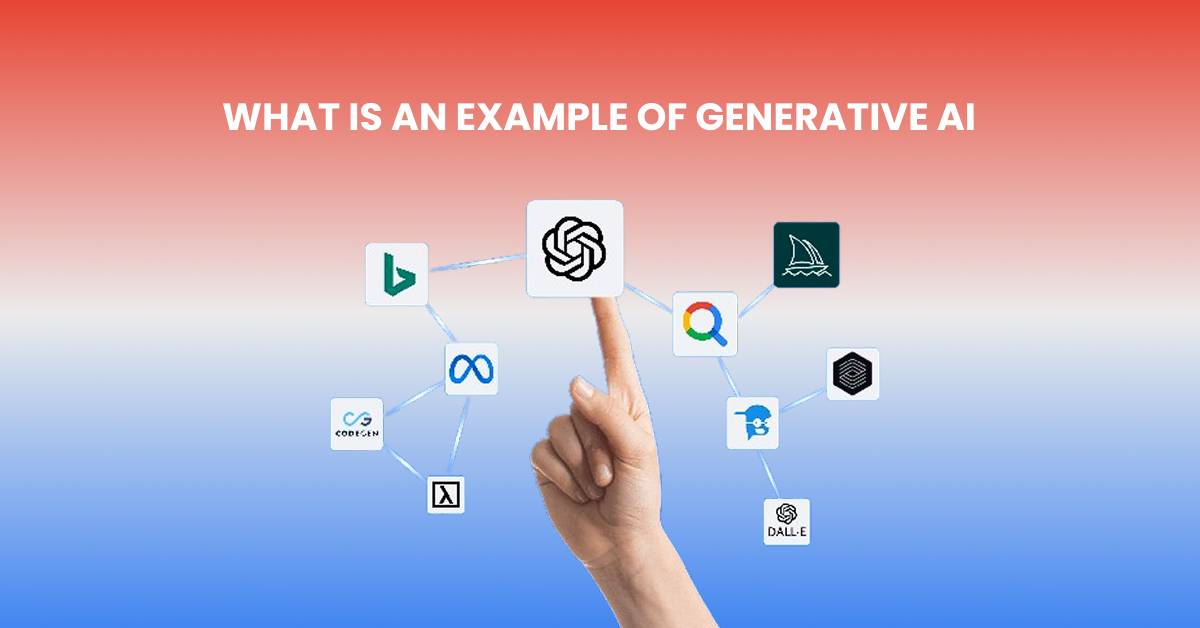
Artificial intelligence has revolutionized how we create content, and generative AI stands at the forefront of this transformation. But what exactly is an example of generative AI, and how do these innovative technologies work? Let’s explore this fascinating world of AI-powered creation.
For those new to this topic, we recommend first reviewing our earlier blog post, “How to Learn Generative AI?” As generative AI continues to reshape the digital landscape, developing skills in this area has become increasingly important.
Understanding Generative AI Technology
Generative AI refers to artificial intelligence systems that can create original content, including text, images, music, and code. Unlike traditional AI that simply analyzes data, generative AI produces entirely new material based on patterns learned from existing information.
The most recognizable example of generative AI is ChatGPT, which generates human-like text responses to questions and prompts. This AI content generator has transformed how people work, study, and communicate by providing instant, coherent answers to complex queries.
Popular Examples of Generative AI in Daily Use
Text Generation Tools
When discussing a practical example of generative AI, text-based tools immediately come to mind. These AI writing assistants help create articles, emails, code, and creative stories. They understand context, maintain consistency, and adapt their tone based on user requirements.
Content creators and marketers frequently use these automated content creation systems to brainstorm ideas, draft outlines, and produce initial versions of written material. Students utilize them for research assistance, while developers leverage them for coding support.
Image Creation Platforms
Another compelling example of generative AI includes image synthesis tools like DALL-E, Midjourney, and Stable Diffusion. These AI image generators transform text descriptions into unique visual artwork within seconds.
Designers, marketers, and artists employ these machine learning tools to visualize concepts, create marketing materials, and explore creative possibilities that would traditionally require hours of manual work.
Audio and Music Generation
AI-powered audio creation represents yet another example of generative AI that’s gaining momentum. These systems compose original music, generate realistic voice narrations, and even create sound effects for various projects.
How Generative AI Works?
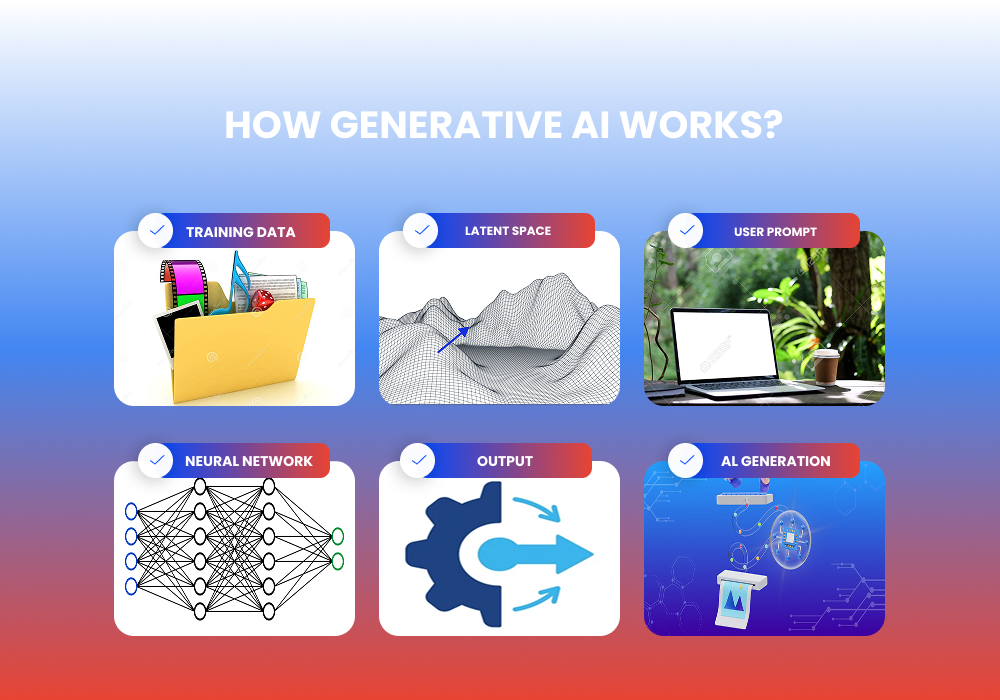
Generative AI systems operate through deep learning neural networks trained on massive datasets. They identify patterns, relationships, and structures within this training data, then use that knowledge to generate new content that resembles the original material but doesn’t copy it.
The technology relies on sophisticated algorithms that predict what should come next based on context. For instance, when you see generative AI generating text, it’s calculating the most probable next word based on previous words and learned patterns.
Real-World Applications and Benefits
Businesses across industries are implementing these intelligent automation systems to boost productivity. Here’s how different sectors are leveraging generative AI:
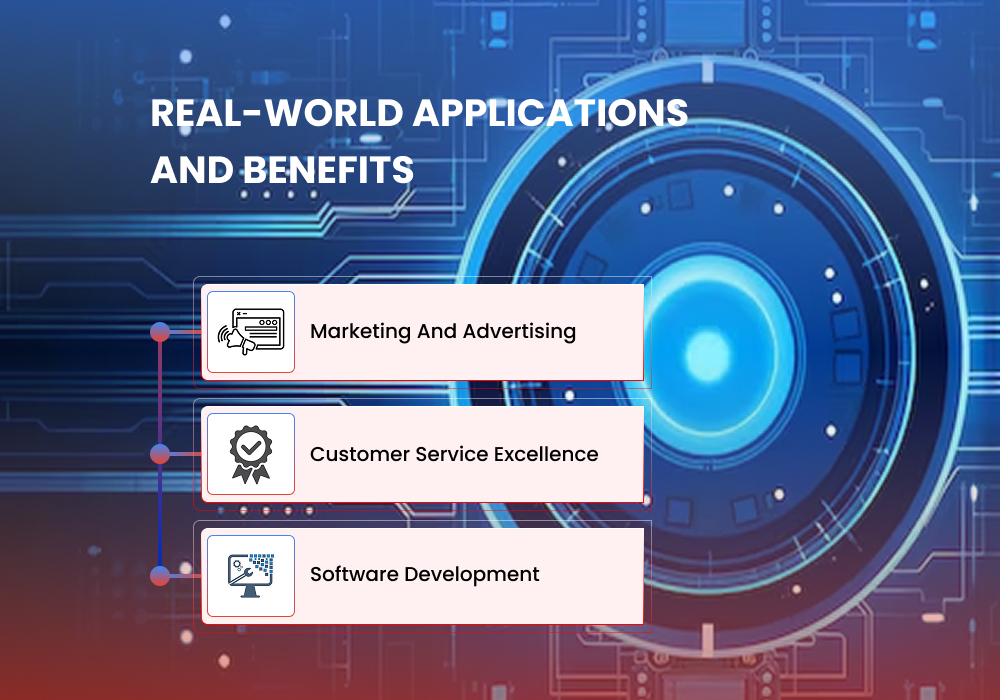
Marketing and Advertising
- Generate multiple ad copy variations for A/B testing campaigns
- Create compelling product descriptions for e-commerce platforms
- Develop social media content calendars with engaging posts
- Design email marketing campaigns with personalized messaging
- Produce blog articles and SEO-optimized content rapidly
Customer Service Excellence
- Deploy AI chatbots for 24/7 customer support availability
- Provide instant responses to frequently asked questions
- Handle multiple customer inquiries simultaneously
- Generate personalized support responses based on customer history
- Reduce response times from hours to seconds
Software Development
- Use code generation tools to accelerate application development
- Automate debugging and code optimization processes
- Generate documentation and technical specifications automatically
- Create test cases and quality assurance scripts
- Translate code between different programming languages
Efficiency and Productivity Gains
The efficiency gains are remarkable. Tasks that once required hours now complete in minutes, allowing professionals to focus on strategic thinking and creative problem-solving rather than repetitive content production:
- Time Savings: Reduce content creation time by 60-80%
- Cost Reduction: Lower operational costs through automation
- Scalability: Handle increased workload without proportional staff increases
- Consistency: Maintain brand voice across all generated content
- Innovation Focus: Free up human talent for strategic initiatives
- Faster Iteration: Test multiple approaches quickly and efficiently
- Enhanced Creativity: Use AI suggestions as creative springboards
- Resource Optimization: Allocate human expertise where it matters most
Frequently Asked Questions
What is the most common example of generative AI?
ChatGPT is currently the most widely recognized example, used by millions for writing, research, and problem-solving tasks.
Can generative AI replace human creativity?
No, generative AI serves as a creative assistant that enhances human capabilities rather than replacing original human thinking and innovation.
Is generative AI content plagiarism-free?
Yes, generative AI creates original content based on learned patterns rather than copying existing material, though human review ensures uniqueness and accuracy.
How accurate is generative AI?
Accuracy varies by model and use case. While impressive, generative AI can make mistakes and should always be fact-checked for critical applications.
Do I need technical skills to use generative AI?
No, most modern generative AI tools feature user-friendly interfaces that require no coding or technical expertise.
Is generative AI expensive to use?
Many generative AI tools offer free tiers with basic features, while premium subscriptions provide advanced capabilities for professional use.
Ready to explore generative AI for your projects? Visit BlogAcademy.tech for more insights on leveraging AI technology effectively.