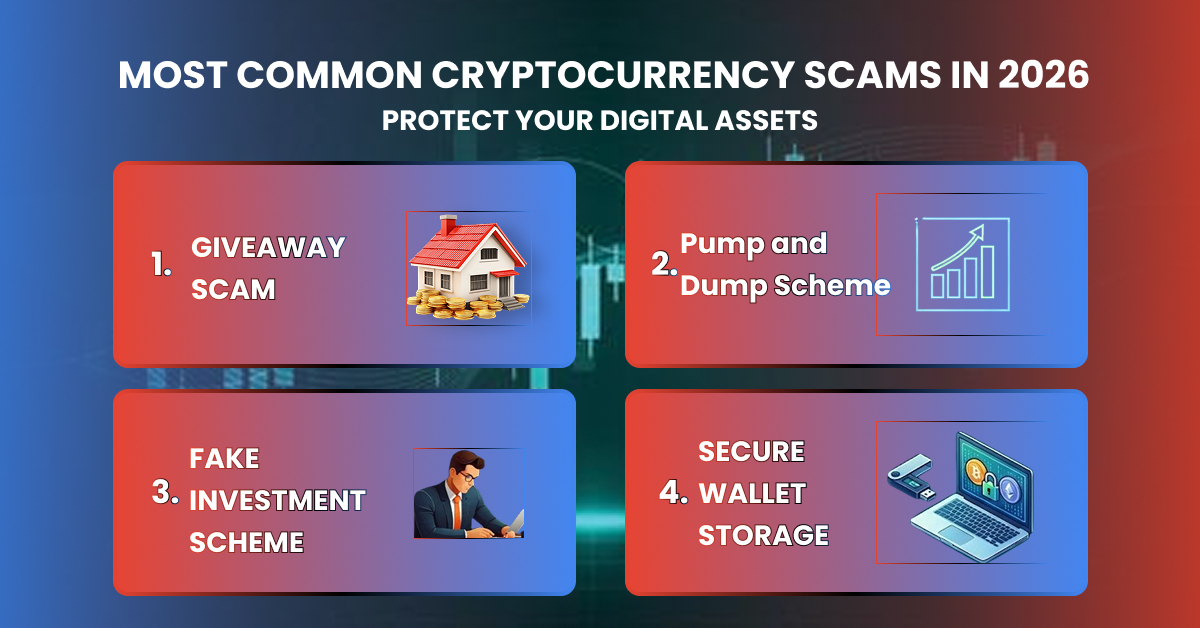
The cryptocurrency market continues to grow exponentially, but unfortunately, so do the scams targeting unsuspecting investors. As we navigate through 2026, understanding the common cryptocurrency scams has become more crucial than ever. This guide will help you identify and avoid the most prevalent threats in the digital currency space.
We recommend reviewing our previous article, “How to Buy Cryptocurrency Safely”, which helps you navigate the crypto world with confidence.
Understanding the Cryptocurrency Scam Landscape
Cryptocurrency scams have evolved significantly over the years. Fraudsters now employ sophisticated tactics that can fool even experienced investors. Recognizing these schemes is your first line of defense against potential financial loss.
Top Common Cryptocurrency Scams in 2026

Fake Investment Platforms
One of the most common cryptocurrency scams involves fraudulent investment platforms. Scammers create professional-looking websites promising guaranteed high returns.
These platforms may appear legitimate initially, allowing small withdrawals to build trust. However, once you invest a significant amount, the website disappears along with your funds.
Red flags include:
- Promises of unrealistic returns
- Pressure to invest quickly
- Lack of proper registration or licensing
- No verifiable company information
Romance and Social Media Scams
Scammers increasingly use dating apps and social media platforms to build relationships with victims. After gaining trust, they introduce cryptocurrency investment opportunities. This emotional manipulation makes it one of the most effective cryptocurrency scams today.
Phishing Attacks
Phishing remains a persistent threat in the crypto world. Scammers send emails or messages pretending to be from legitimate exchanges or wallet providers. These communications contain links to fake websites designed to steal your login credentials and private keys.
Fake Giveaways and Airdrops
Celebrity impersonation scams on social media platforms promise to multiply any cryptocurrency you send. These fake giveaways are among the most visible common cryptocurrency scams, often using hijacked verified accounts to appear authentic.
How to Protect Yourself from Common Cryptocurrency Scams?

- Do Your Research: Before investing in any cryptocurrency project, thoroughly research the company, team members, and technology. Legitimate projects have transparent operations and verifiable team credentials.
- Use Secure Wallets: Store your cryptocurrency in reputable hardware or software wallets. Never share your private keys with anyone, and enable two-factor authentication wherever possible.
- Verify Everything: Always double-check website URLs, email addresses, and social media accounts. Scammers often use slight variations of legitimate names to deceive users.
- Trust Your Instincts: If an opportunity sounds too good to be true, it probably is. High-pressure tactics and guaranteed returns are hallmarks of fraud.
Staying Updated on Emerging Threats
The cryptocurrency landscape changes rapidly, and new scam variations emerge regularly. Stay informed by following reputable cryptocurrency news sources and security advisories. Remember that awareness is your strongest weapon against these common cryptocurrency scams.
Frequently Asked Questions
Q1: What should I do if I’ve been scammed?
Report the incident immediately to your local law enforcement and the platform where the scam occurred. Also, notify the cryptocurrency exchange involved and consider consulting with a legal professional.
Q2: Can I recover funds lost to cryptocurrency scams?
Recovery is extremely difficult due to the irreversible nature of blockchain transactions. However, reporting to authorities increases the chance of tracking scammers and potentially recovering assets.
Q3: Are all cryptocurrency investments risky?
While all investments carry risk, legitimate cryptocurrency investments differ from scams. Research projects thoroughly, invest only through regulated platforms, and never trust promises of guaranteed returns.
Q4: How can I verify if a cryptocurrency platform is legitimate?
Check for proper licensing, read independent reviews, verify the team’s credentials, ensure the platform has clear contact information, and confirm it follows regulatory compliance in your jurisdiction.
Q5: What’s the biggest warning sign of a cryptocurrency scam?
Promises of guaranteed high returns with little to no risk are the clearest red flag. Legitimate investments always involve risk, and no one can guarantee profits in the volatile crypto market.
Conclusion
While cryptocurrency offers exciting investment opportunities, it also attracts sophisticated scammers. By understanding these common threats and following security best practices, you can significantly reduce your risk of falling victim to fraud.
Always prioritize security over potential profits, and never invest more than you can afford to lose. Stay vigilant, verify all opportunities thoroughly, and remember that legitimate cryptocurrency investments never require urgent decisions or guaranteed returns.
Stay one step ahead of crypto scammers, Share this guide to help protect others, and follow Blog Academy for the latest security tips and cryptocurrency insights.