
Smart contracts have revolutionized how we think about digital agreements. They eliminate middlemen, reduce costs, and execute automatically when conditions are met.
But not all blockchain networks are built the same. If you’re a developer, investor, or business owner exploring your options, understanding the pros and blockchain networks that lead the pack can save you time and money. Let’s break it down simply.
Before you continue reading this blog post, take a look at our previous article, “How to Buy Blockchain Development Tools Online.” Whether you are an experienced developer or just getting started with Web3, choosing the right blockchain development tools is very important.
What Are Smart Contracts and Why Do They Matter?
Smart contracts are self-executing programs stored on a blockchain. They run automatically based on pre-written rules, no lawyer, no bank, no third party needed.
From DeFi platforms and NFT marketplaces to supply chain systems and insurance protocols, smart contracts power some of the most exciting tech innovations today.
Choosing the right blockchain for your smart contract needs is one of the most critical decisions in any Web3 project.
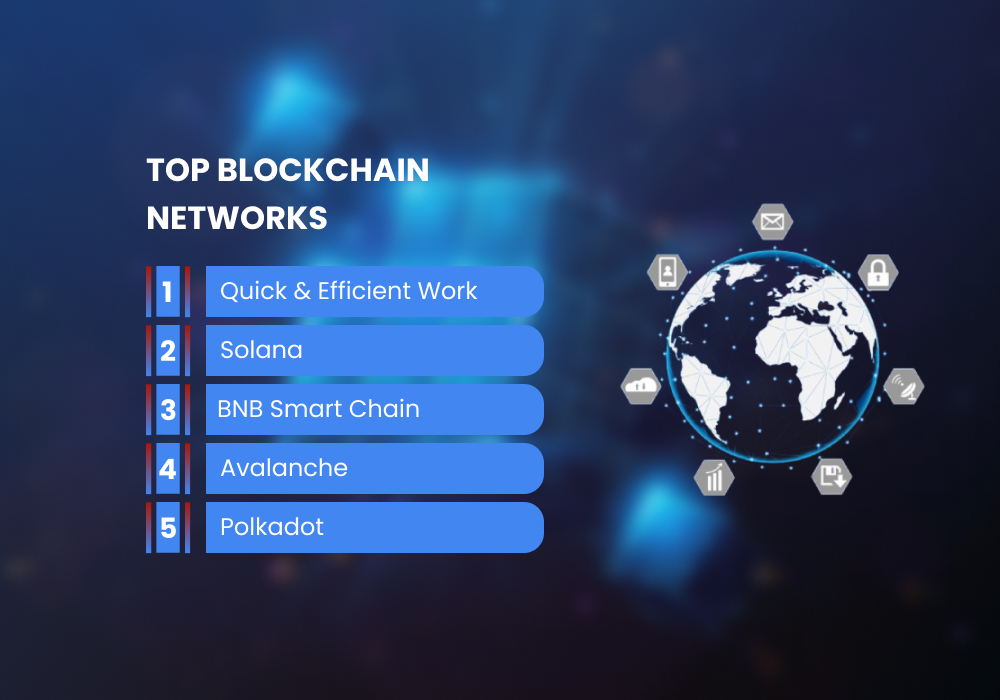
Top Blockchain Networks With the Best Smart Contract Capabilities
Ethereum: The Original Smart Contract Giant
When people think about smart contracts, Ethereum usually comes to mind first, and for good reason. Launched in 2015, Ethereum introduced the concept of programmable blockchain contracts to the world.
The pros of blockchain networks like Ethereum include an enormous developer community, extensive documentation, and the most mature ecosystem of decentralized applications (dApps). Ethereum runs on the Solidity programming language, which has become an industry standard.
After its shift to Proof of Stake (The Merge), Ethereum also became significantly more energy efficient. However, gas fees can still be high during network congestion, which is a notable drawback.
Best for: DeFi, NFTs, enterprise dApps, and long-established projects.
Solana: Speed and Low Costs
Solana has earned a strong reputation for its blazing-fast transaction speeds and incredibly low fees. It can handle up to 65,000 transactions per second (TPS), making it one of the most scalable blockchain networks available today.
For developers building real-time applications or high-volume platforms, Solana is a compelling choice. The pros of blockchain networks here are clear: speed, affordability, and a growing ecosystem make it highly attractive.
One trade-off is that Solana has experienced network outages in the past, raising questions about stability.
Best for: Gaming, high-frequency trading, NFT platforms, and fast-paced dApps.
BNB Smart Chain (BSC): Affordable and Developer-Friendly
Binance’s BNB Smart Chain offers EVM (Ethereum Virtual Machine) compatibility, which means Ethereum developers can migrate their projects with minimal friction. Transaction fees are much lower than on Ethereum, making it a popular choice for budget-conscious developers.
Among the key pros and blockchain networks discussions, BSC often stands out for accessibility. It’s beginner-friendly, well-supported, and has a large user base thanks to Binance’s global presence.
Best for: DeFi projects, token launches, and developers migrating from Ethereum.
Avalanche: Fast Finality and Customization
Avalanche is designed for both speed and flexibility. It offers near-instant transaction finality and supports the creation of custom blockchain “subnets,” allowing developers to build tailored environments for specific use cases.
It’s EVM-compatible and gaining traction in the enterprise and gaming sectors. The pros of the blockchain networks of Avalanche include high throughput, low latency, and customizable infrastructure.
Best for: Enterprise blockchain apps, gaming ecosystems, and cross-chain platforms.
Polkadot: Interoperability Champion
Polkadot takes a unique approach by connecting multiple blockchains through a relay chain. This makes it ideal for projects that need to operate across several networks simultaneously.
Its parachain model allows independent blockchains to share security while maintaining their own rules. Among the pros and blockchain networks in the interoperability space, Polkadot consistently ranks at the top.
Best for: Cross-chain applications, Web3 infrastructure, and multi-network projects.
How to Choose the Right Blockchain Network for Smart Contracts?
Every project is different, so your choice should match your specific goals. Here are the key factors to consider:
- Transaction Speed: Check how fast the network processes transactions.
- Gas Fees: Compare transaction costs to match your budget.
- Developer Tools: Ensure strong documentation and development support.
- Community Support: Large communities mean better help and resources.
- Security History: Review past security performance and reliability.
- Project Goals: Choose based on your specific business needs.
Frequently Asked Questions (FAQs)
Q1. Which blockchain is best for beginners building smart contracts?
Ethereum and BNB Smart Chain are both great starting points due to their extensive documentation and developer tools.
Q2. Is Ethereum still the best blockchain for smart contracts in 2026?
Ethereum remains the most trusted, but networks like Solana and Avalanche are strong competitors depending on your needs.
Q3. What programming languages are used for smart contracts?
Solidity is the most common (used on Ethereum, BSC, and Avalanche). Rust is used for Solana, and Ink! for Polkadot-based contracts.
Q4. Are smart contracts on all blockchains secure?
Security depends on the code quality and the network’s consensus mechanism. Auditing smart contracts before deployment is essential on any platform.
Q5. Can I deploy the same smart contract on multiple blockchains?
Yes, if the networks are EVM-compatible (like Ethereum, BSC, and Avalanche), you can often deploy the same contract with little to no modification.
Final Thoughts
The world of smart contracts is evolving rapidly, and so are the blockchain networks powering them. Each platform has its own strengths, and the best choice ultimately depends on what you’re building and who you’re building it for. Staying informed and testing on testnets before going live is always a smart move.